Many OEMs choose a molder to get a program through validation, without thinking much past that first production run. A vendor selected for a low-volume validation build isn’t automatically the right partner once a program moves into commercial-scale production, and a molder that can’t take on an insert-molded assembly or a complex thin-wall geometry becomes a constraint on the device itself, not just the supply chain. The molding relationship an OEM starts with often ends up defining how far the program can scale before something has to change.
Precision Molding and Material Expertise That Hold Up From First Article Through Full-Scale Production
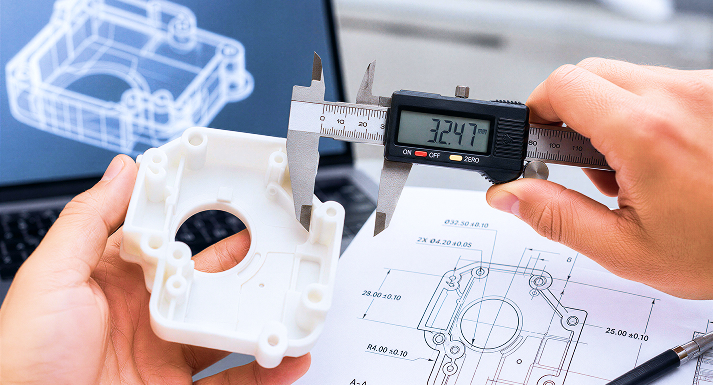
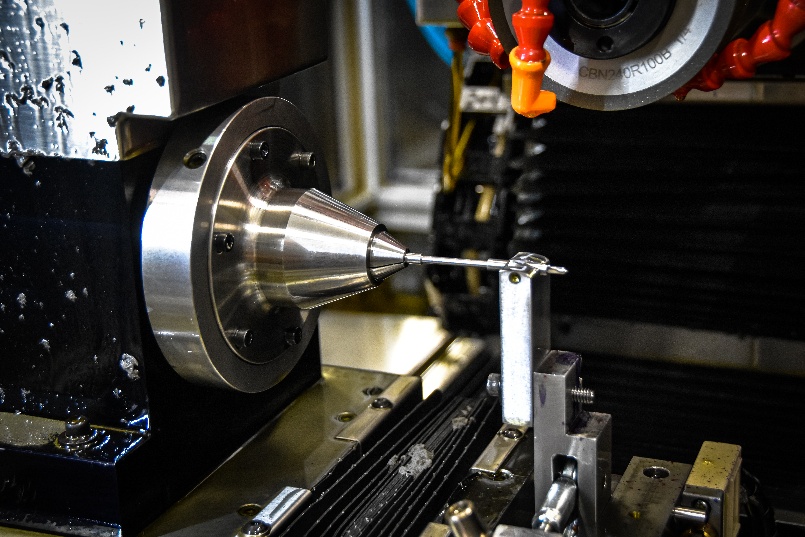
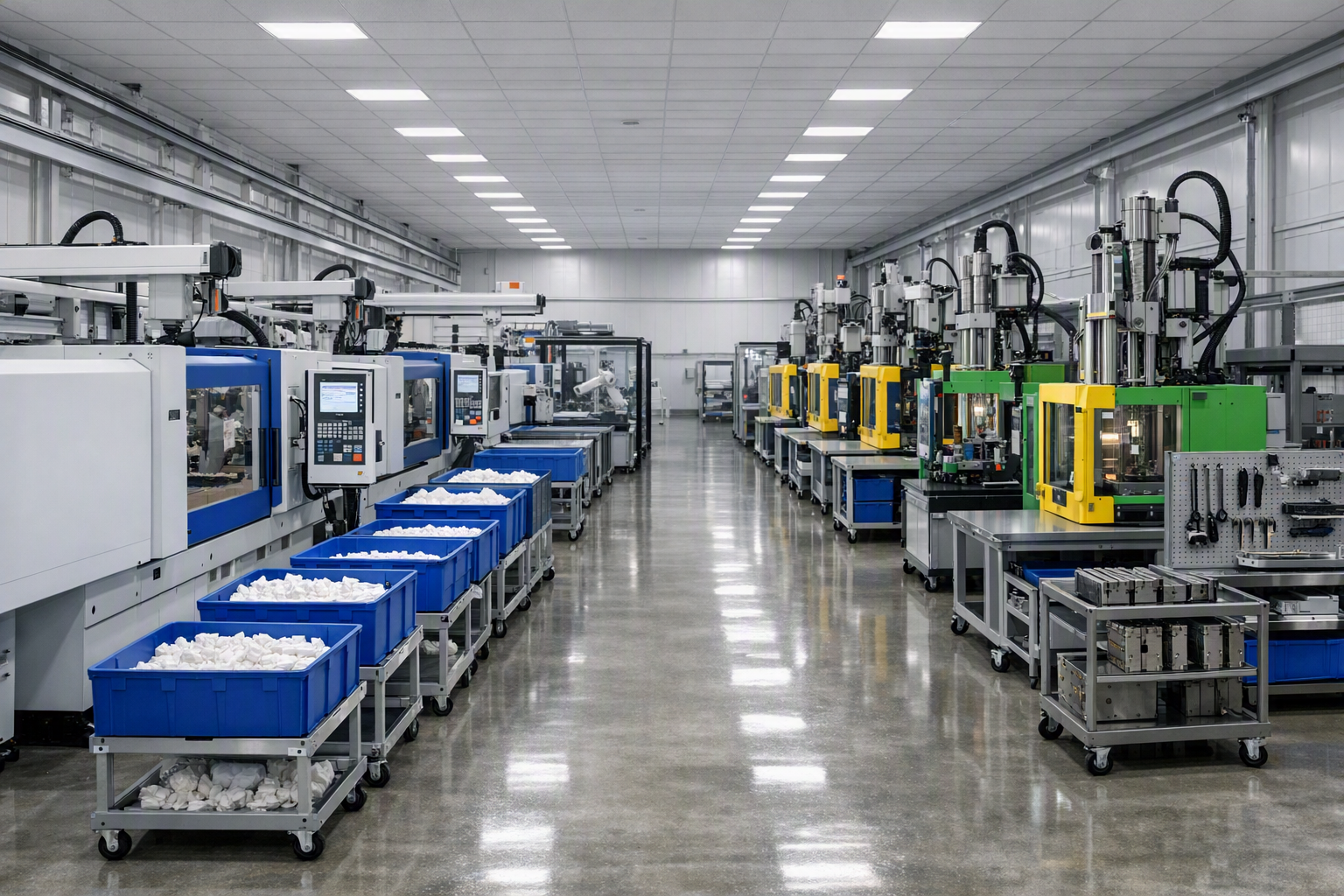
Precision molding isn’t just about hitting print on the first sample — it’s about maintaining critical dimensions, tight tolerances, and consistent part quality across every production run that follows. Red Star runs horizontal and vertical presses from 10 to 250 tons, which means a program doesn’t have to jump facilities between an early-production build and high-volume manufacturing. That same equipment range supports processing across the medical-grade thermoplastics OEMs actually specify — polypropylene, polycarbonate, ABS, Ixef®, PEEK, carbon-filled PEEK, and Radel® — so material selection isn’t constrained by what a given press can run.
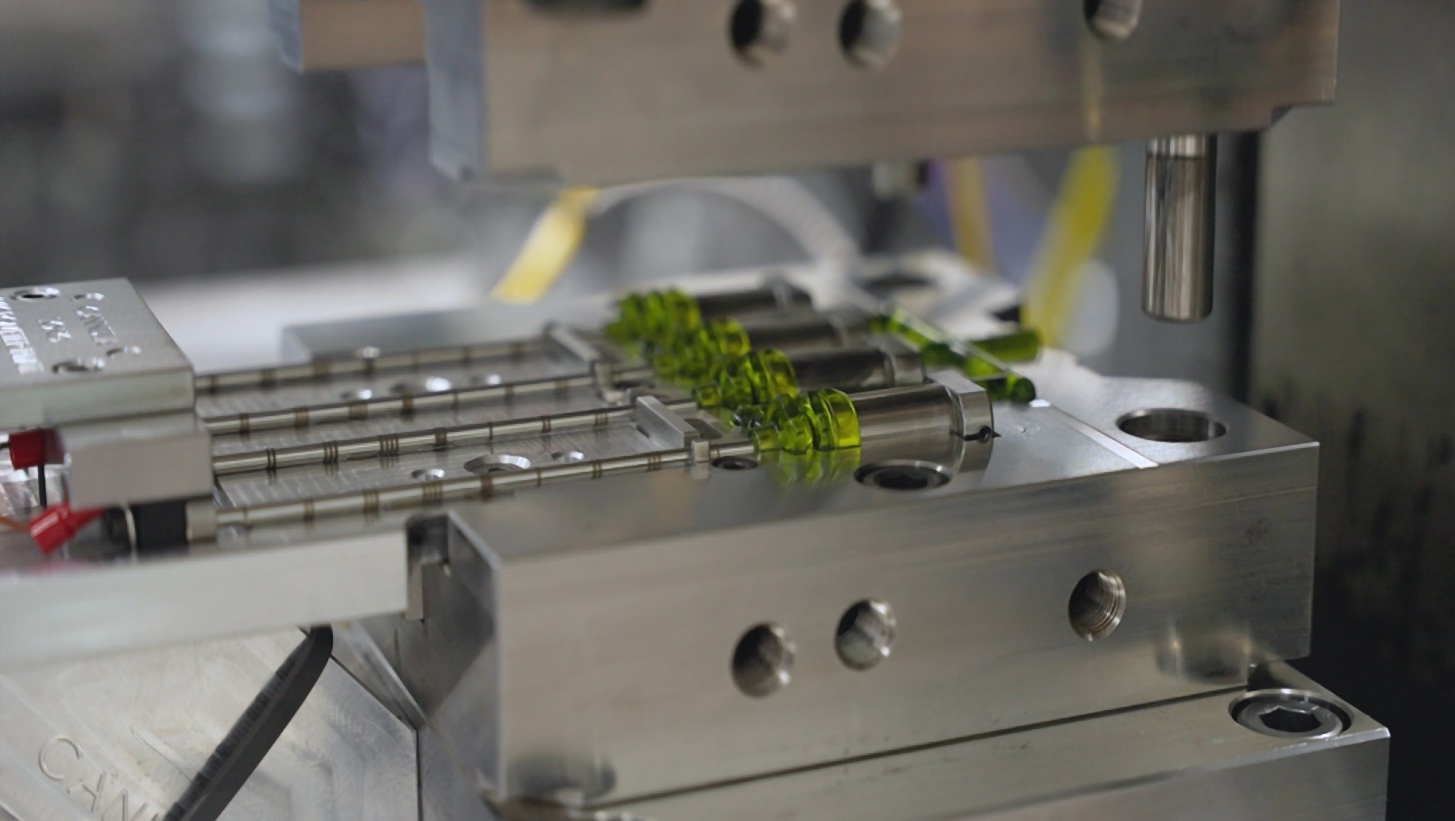
Insert Over Molding: Engineering Integrated Assemblies, Not Just Parts
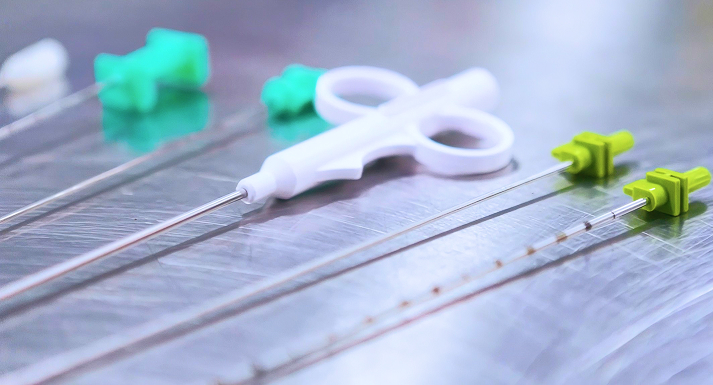
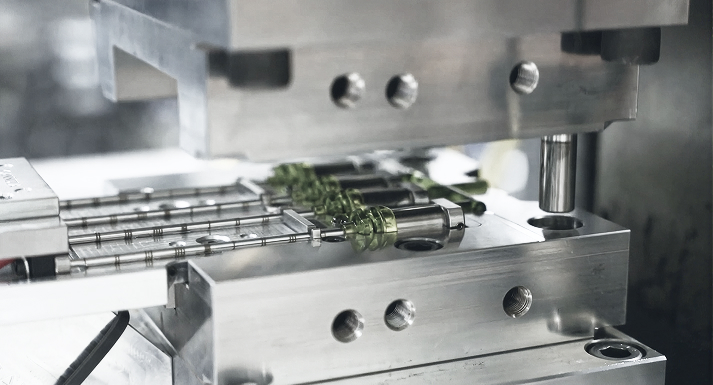
Insert over molding turns a multi-component assembly problem into a single molding operation. Molding polymer directly around cannulas, needles, metal inserts, extrusions, and other components creates a mechanical bond that’s more reliable than an adhesive joint or a manual assembly step — and it removes those secondary operations from the process entirely. The result is a stronger, more consistent assembly built to meet functional, dimensional, and performance requirements in one pass through the press, rather than one pass through molding followed by a separate assembly operation with its own variation to control.
Complex Components & Assemblies
Intricate features, thin walls, tight tolerances, and challenging geometries are where a molding partner’s process discipline actually gets tested. Red Star’s engineering team evaluates part geometry, material selection, tooling, and processing requirements together — the same design-for-manufacturability discipline we apply to new product development — and backs it with controlled molding processes and rigorous inspection to keep performance repeatable across complex parts, not just simple ones.
MOLDING A COMPLEX PART OR INTEGRATED ASSEMBLY?
Talk to Red Star’s molding team about press capacity, insert over molding, and material options before your next program is locked into a design or a vendor.
Scaling From Validation Into High-Volume Production
Moving a program from validation into commercial manufacturing takes more than a bigger press — it takes multi-cavity tooling, automation, and refined processing parameters working together to improve throughput without drifting off spec. Optimized cycle times and multi-cavity molds are what actually move per-part cost in the right direction at scale, and having that automation expertise in-house means a program can scale up without a re-quote from a different vendor.
Mold Transfer & Production Support: Reducing Risk When You Change Manufacturing Partners
Supply chain disruptions over the past several years have pushed OEMs to look harder at where their components actually come from — in some cases discovering that multiple contract manufacturers were sourcing from the same upstream supplier, which made a supposed backup no backup at all. That scrutiny has made mold and program transfers more common, and more consequential when they’re handled poorly. Red Star approaches an incoming mold with a comprehensive tool evaluation — condition, compatibility, maintenance needs, production readiness — before committing to a transfer timeline, then coordinates tooling, documentation, and validation requirements so the transfer doesn’t become a second qualification project on top of the first. Ongoing mold maintenance, process control, and quality oversight carry the program forward from there.
- Precision molding with horizontal and vertical presses from 10 to 250 tons and medical-grade thermoplastic expertise, including PEEK, Ixef®, and Radel®
- Insert over molding that integrates metal, extrusion, and polymer components into a single molded assembly
- Complex part geometries — thin walls, tight tolerances, intricate features — backed by DFM review and rigorous inspection
- Multi-cavity tooling and automation to scale efficiently from validation into high-volume production
- Structured mold transfer support, from incoming tool evaluation through long-term production maintenance
A molding partner that can only do one of these well — prototype-stage precision, or high-volume scale, or a clean mold transfer — puts a ceiling on how far an OEM can take a program before something has to change. Because Red Star runs molding, tooling, cleanroom assembly, and packaging under one roof, a program can move from a complex first article through high-volume production, or transfer in from another supplier, without changing partners, requalifying a new facility, or losing the process knowledge that got the part right in the first place.