The Challenge
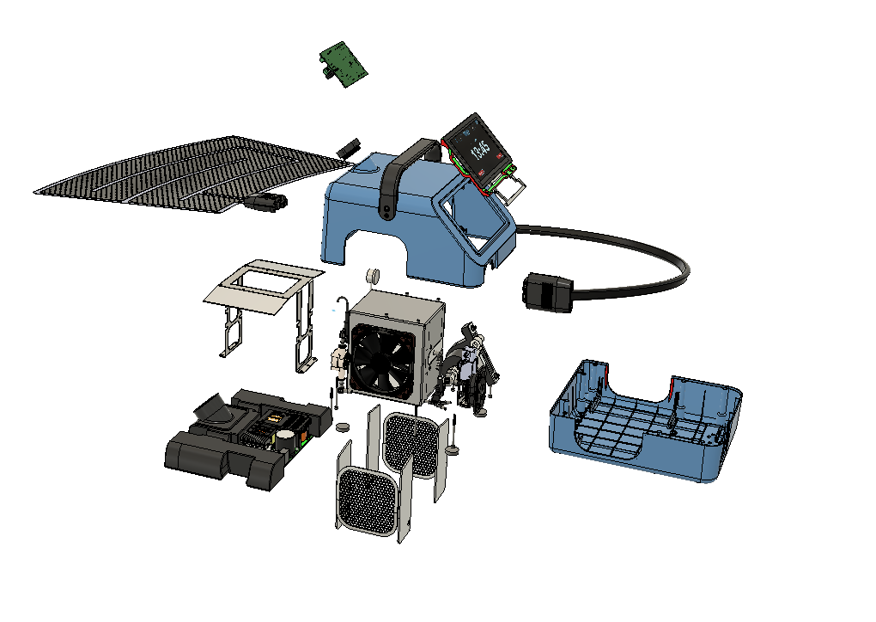
The device had to do a lot within a small footprint. Shipping requirements set firm limits on both size and weight, yet the system still needed room for a full set of mechanical, electrical, and fluid-handling components. It also needed enough airflow to manage heat while staying quiet enough for clinical use. These constraints pulled against each other, and all of it had to be delivered within the documentation and traceability rigor a Class II device requires.
- Shipping-driven dimensional limits: All required mechanical, electrical, and fluid-handling components had to fit within a fixed shipping envelope.
- Shipping-driven weight limits: Total device weight had to meet shipping targets without sacrificing structural integrity, performance, or durability.
- Noise vs. thermal performance: Operational noise had to come down while the system kept the airflow needed for effective thermal management.
- Software and firmware integration: Control systems, software, and firmware had to be developed to run the device and integrate its subsystems.
- Class II design controls: Development required full design documentation, requirements traceability, and verification and validation activities.
The ResultS
Red Star’s engineering team optimized the mechanical packaging and internal layout to fit every critical system component within the required shipping dimensions. Weight was handled with the same discipline. The team evaluated component selection and mechanical design choices one by one to reach shipping weight targets while keeping the device functional and durable in the field.
To solve the trade-off between noise and heat, Red Star worked directly with fan suppliers to evaluate and select a fan that balanced airflow, thermal performance, and acoustic output. The result is a device that stays cool without being disruptive in a clinical setting.
Red Star also developed the software, firmware, and control systems internally. This gives the program greater control over device functionality and system integration, and it provides a faster, more direct path for future product updates. A structured design control process guided the work from start to finish, maintaining full design traceability, supporting regulatory compliance, and confirming that the device met every defined requirement for a Class II medical device.
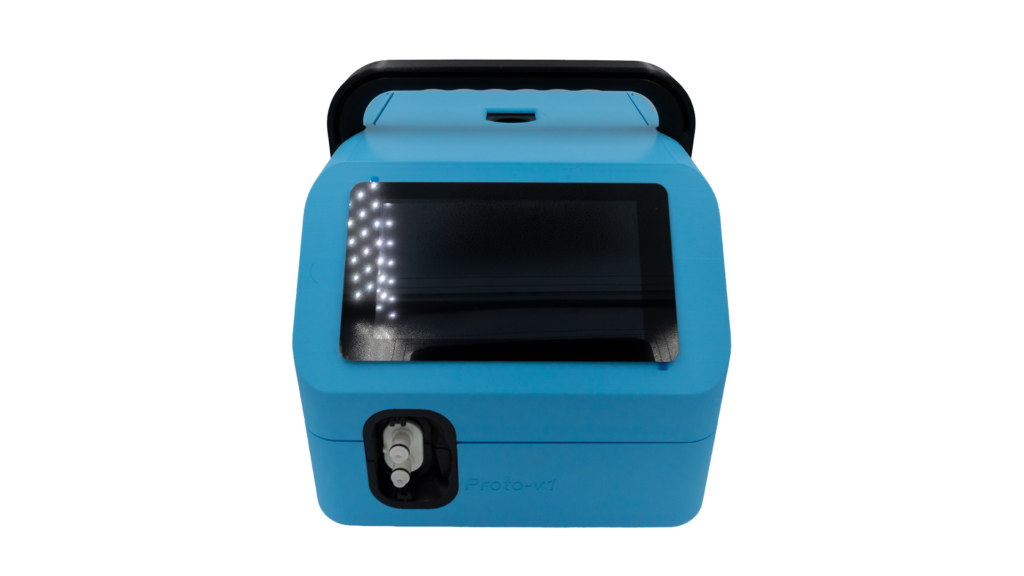
With development complete, Red Star transitioned the Cold Therapy device into full production within its own facility. Keeping design and manufacturing under one roof meant the engineering decisions behind the device carried straight onto the production floor. Those decisions covered packaging layout, component selection, and design control documentation. The result is a single, accountable source for the complete device, which removes the handoff risk and communication gaps that come with splitting design and manufacturing across separate suppliers.